Sunday, May 24, 2015

Quality Over Quantity

This past week in American Studies, while discussing the book The Great Gatsby, the topic of American ideals and themes and things that are inherently "American" came up. One was the topic of work. Specifically, how much work Americans do. 

People in America work more hours per week and year than people in other countries. According to the International Labour Organization, each American works on average "137 more hours per year than Japanese workers, 260 more hours per year than British workers, and 499 more hours per year than French workers." How very American! Why do we as a nation work so much more than people in other countries? 

As it turns out, were doing it wrong. Although Americans have this notion that working longer hours will eventually pay off in some way, working too much has negative effects. A study conducted by Dr. K. Anders Ericsson shows that what your parents say is right: quality trumps quantity. In his study, Dr. Ericsson and his colleagues studied violin players. They wanted to know what the excellent violinists were doing differently. It turns out they were practicing for shorter amounts of time. Ericsson and his team concluded that it is more effective to work harder for shorter amounts of time, rather than work extremely long hours. The successful people are leaving work early! 

So really, why are Americans working such long hours? 

"Abolish Bail"

While I was doing research for my Junior Theme last month, I started following Michelle Alexander, civil rights lawyer and author of The New Jim Crow, on Facebook, as a way to get more sources and learn more about my topic. I still follow her, so I saw that just the other day she posted a link to an article on her page: "Too Many People in Jail? Abolish Bail." The article is consistant with much of the research I conducted for my Junior Theme, which attempted to answer the question: Why are there so many African Americans in prison? Unlike my research, however, this article tells of a possible solution to the problem, posed by mayor Bill de Blasio of New York, that I and Michelle Alexander agree would help to begin to solve the problem: "abolish bail."

One major reason why there are so many people in prison (the chart below shows just how alarming the increase has been) is because there is a huge backlog of cases in the courts. That is, thousands of
Prison Population vs. Year
people are in prison simply because they are awaiting trial. "According to a 2011 report by the city's Independent Budget Office, 79 percent of pretrial detainees were sent to Rikers" (where Mayor Bill de Blasio is from) "because they couldn't post bail right away." People are literally being detained in prison because they are poor.

Mayor de Blasio's solution is to abolish monitary bail all together. He argues that the people the jails would be releasing are not a high threat because the people who are threatening and need to be detained are not given bail in the first place. Perhaps this should be considered seriously. There are an overwhelming amount of people in jail, which needs to be fixed. In the words of Michelle Alexander, keeping people detained for being poor is "immoral and unjust and counterproductive."

Kane and Gatsby: Great American Characters

As part of our unit on class in American Studies, we read the book The Great Gatsby and watched the movie Citizen Kane. Fitzgerald's Gatsby is one of the most famous characters in American literature, especially after the 2013 movie version of the novel starring Leonardo Dicaprio came out.  The Great Gatsby is considered by some to be the "Great American Novel." Citizen Kane is a 1941 movie produced by, written by, directed by, and starring Orsen Welles, that contains many of the same themes as The Great Gatsby. In many ways, both Kane and Gatsby represent the "American Dream," or at least very American ideals.

In my opinion, The Great Gatsby and Gatsby's character represent the "American Dream" in many ways, making the novel the "Great American Novel" in many ways. First, Gatsby went from being "Mr. Nobody from Nowhere" (Tom calls him this on page 130 of the book) to being extraordinarily,
Leonardo Dicaprio as Gatsby 
immensely wealthy. This is the American Dream: going from rags to riches, all because of hard work and discipline and a little luck. Gatsby is also a "Great American Character." He spends his entire existence trying to "get the girl." This crazy-romanticness, I would argue, is very American. Additionally, the story is still relevant today, 90 years after the book was written. The themes in the book-new money versus old money, going from rags to riches, class, love, etc.- are still very powerful American literature and American society today.

Citizen Kane and Kane's character in particular are also very American. Kane, after his parents come into a lot of money, essentially goes from "rags to riches" like Gatsby. This in and of itself is a very American theme. Furthermore, the entire premise of the story- Kane's mysterious last word "rosebud" and the other character's attempt to learn more about Kane- is very American. Kane's (apparent) last word was "rosebud," which the viewer knows is the name of the sled he had as a child. "Rosebud" is a symbol of his childhood, and even after living a full life of riches and success, on his death bed, that is what Kane is thinking about. In my opinion, the romanticizing of one's childhood is a very American theme.
Citizen Kane 

Both Kane and Gatsby are very American characters, and Citizen Kane and The Great Gatsby are viewed today as some of the best representations of American society and relay very American themes and ideals. But to what extent can there be a "Great American Story?" 

Saturday, May 16, 2015

Income Inequality: Why No Outcry?

This past week in American Studies, we watched the film "Inequality For All," a documentary about income inequality in the United States. The statistics this film provided were astounding. (For example, that the top 400 people in the U.S. have more wealth than the bottom 150 million). Income inequality is growing at an alarming rate; the gap between the rich and the poor is increasing rapidly. In 1978, the average male worker made $48,302, while they average male in the top 1% made $393,682. In 2010, however, the average male worker made only $33, 751, while the average male in the top 1% made $1,101,089.   It is clear that income inequality is becoming an increasingly prevalent and pressing issue in today's society. So why isn't the income/wealth gap causing an outcry?

We talked about possible answers to this question in American Studies class. Some answers we came up with as a class are listed below. (From anamericanstudies.posthaven.com)

1. Negative perception of the protesters
2. Aspiration to become upper class as opposed to resent those citizens
3. A disproportionate influence (by the upper class) in the political arena (lobbying) and in the media
4. Ever-increasing amounts of consumer and household debt helping to finance an American consumer lifestyle.

Personally, I think that #2 is a major reason why there is no real outcry against the income/wealth gap in the United States.

People want to fulfill the "American Dream." They want to be successful and rich and happy and comfortable. Sure, people of lower class will resent people of upper class, people who have apparently fulfilled the American Dream, to some extent. However, I believe that people of lower class will never create a full-blown outcry against the upper class because to a large extent, they strive to be them.

Another reason I think there has been no full-blown outcry is because the people that are on the "losing end" of this gap, the lower and lower-middle class, do not have the time, resources, or influence to protest. These are the people who are working long, tiring hours, and have potentially very long commutes home. There is simply not enough time or energy for the lower class to start an outcry.

Why do you think there has been no full-blown outcry against the (increasing) income/wealth gap in the United States?

Saturday, May 9, 2015

What Does Our Stuff Say About Our Class?

This past week in American Studies, we have been studying class and classism. As part of this unit, we looked at various aspects of the Kenilworth train station (pictured below) and how these aspects indicate Kenilworth's class. Some things people noticed were the flower pots, the covered bike rack, the size, and the architecture.

Kenilworth Train Station
I don't even use the train, but my town's train station is an indication of my class. This made me wonder what other aspects of my life indicate my class and the class of people in my area. 

First, I thought that one's house and the houses around theirs could be an indicator of their class. I decided to take a look at my own house and see what aspects others would perceive as an indicator of my class. Below is a picture of my house, which is locate in Kenilworth, Illinois. What aspects of my house could indicate my class? I first noticed the putting green, which my family took out before we moved in. I also noticed the garage, the shrubbery and yard, the upkeep, and more. (I feel really "snooty" as I'm writing this, but I'm just trying to study other aspects of my life that could indicate my class). What else do you notice about my house that could indicate my class?
My house, located in Kenilworth, Illinois

It is clear that tangible aspects of people's lives (their train station, their home, what car they drive, etc.) indicate their class. What other aspects of people's lives indicate their class?

Friday, May 8, 2015

New Trier Township: What Class Are We Really?

In American Studies we are currently studying class and classism. To begin this unit, we were asked to take a survey about class. One of the questions was "To which class/ group to you belong?" (Upper, middle, and lower class were the only options). About 75% of the class reported that they were upper class, and the other 25% reported that they were middle class. But what class do most students at New Trier belong to? (In this post I will focus mostly on Kenilworth for statistics and examples).

One of the major influences on class is income. The "top 5%" of Americans make more than $150,000 annually, and the "top 1%" of Americans make over $250,000 annually. These groups, and even people a little below, are what society considers the upper class of America. And in the New Trier Township, an overwhelming number of people fall into this category. In Winnetka (60093), the median income is $122,100; in Glencoe (60022), it is $145,300, and in Kenilworth (60043), the median household income is $205,300. The average household income in Kenilworth is $346,686. These are just the median incomes; there are clearly a huge number of families that fall into the top 5% and 1%; the rest fall very shortly behind. The New Trier Township's median incomes indicate that the vast majority of families here are upper class.

Another influence on class is one's peer group, the community: a similarity in occupation, education, income and occupational prestige. Out of the 2,522 people in Kenilworth, 44.9 percent have a Bachelor's degree and 40.7 percent have a Graduate degree. In Melrose Park, Illinois, however, only 10.1 percent of people have a Bachelor's degree or higher. As for "occupational prestige," 68.1 percent of (working) people in Kenilworth have a white collar job, and the other 39.1 percent have blue collar jobs. In the New Trier township, the majority of adults are highly educated and work very prestigious jobs with high incomes, which are all great indicators of class.

We also learned in class that marriage is becoming more and more something that the rich do and the lower class tend not to do. If this is truly the case, the marriage statistics for the North Shore tell something about our class. In Kenilworth, 71.7 percent of adults are married. By contrast, only 43 percent of adults in Maywood, another Chicago suburb, are married. If marriage status is truly an indicator of class, the North Shore seems to be upper class.

There are many influences on class, and the overwhelming majority of the New Trier Township seems to be upper class based on these influences. So why didn't more people report that they are from an upper class family? Do they not want to admit it, or did they really think their family is middle class?

Friday, April 24, 2015

The War On Drugs: A Racial War

The War On Drugs began in the early 1970's in an attempt to reduce the use, possession, and sale of illegal drugs in the United States. This war has impacted the nation in unimaginable ways; the prison population, since the war began, has increased from 300,000 to 2 million, giving the United States the highest rate of incarceration in the world (Alexander 6). The War On Drugs has not affected everyone equally; it targets and imprisons African Americans for drug crimes at a rate alarmingly disproportionate to the rate of whites. In fact, between 1986 and 1991, at the height of the War On Drugs, "the number of white drug offenders in state prisons increased by 110 percent," while "the number of black offenders grew by 465 percent" (Shaw 1).

How exactly is the War On Drugs able to target and imprison African Americans at a disproportionate rate?

There are many possible answers to this question; some of these answers lie in the legislation that has been created because of the War On Drugs. Crack cocaine, which is "more likely to be used by African-Americans, will trigger felony charges for amounts 100 times less than powdered cocaine, which is more likely to be used by whites" (Shaw 1). The government has deliberately made punishments for crimes related to crack cocaine much harsher than crimes related to powder cocaine, as a way to target African Americans while remaining "colorblind." (The punishment for crack cocaine really is much harsher: "The sentence for possessing five grams of crack is a mandatory five years. By contrast, to get a five-year sentence for possession of power cocaine, one would have to be caught with 500 grams" (Lanier 2)).

This disparity between the punishments for crack cocaine and poweder cocaine stemmed from a "crack crisis" that occurred during the Reagan administration. The United States saw a dramatic increase in the use of crack cocaine in black neighborhoods, and the media was able to "publicize the emergence of crack cocaine in 1985 as part of a strategic effort to build public and legislative support for the war" (Alexander 5). The media was effectively able to target and label African Americans as drug criminals, which is a huge reason why African American neighborhoods are targeted in the War On Drugs today and why legislation, though "colorblind," gives harsher punishments for crack cocaine than powder cocaine.

Another way the War On Drugs has targeted African Americans at an alarmingly disproportionate rate is through racial profiling. According to Charles Shaw, "racial profiling has been shown to target African Americans for police stops and searches." Police first stop drivers for minor traffic violations, and then are able to catch drug criminals. And although whites and African Americans commit traffic violations at almost the same rate, "42 percent of all stops and 73 percent of all arrests were racial minorities" (Alexander 133). Additionally, "African Americans comprised only 17 percent of drivers along a stretch of I-95 outside of Baltimore, yet they were 70 percent of those who were stopped and searched" (Alexander 133). It is clear that police target African Americans during traffic stops and police stops and searches, perhaps because of a racial stereotype that labels African Americans as criminals. Because African Americans are stopped and searched at much higher rates than whites, they are much more likely to be caught and imprisoned for drug crimes.

The War On Drugs has become a racial war; though it allegedly aims to combat illegal drug useage, it targets African Americans at a highly disproportional rate, partly through the use of stops and searches and legislation.

Tuesday, April 21, 2015

Prison Labor: The New Convict Leasing

One "bloc" of my Junior Theme, which attempts to answer the question "Why are there so many African American people in jail," focuses on prison labor, the use of prisoners by companies for cheap labor. This practice is not a new phenomenon. It is rooted in slavery.


The history of prison labor goes back to the 1800's, at the beginnings of convict leasing. Post-emancipation, Southern states found that "commerce and transportation had collapsed" and "The railroads and levees lay in ruins" (Oshinsky 12). Additionally, many whites were angry and didn't know how to deal with the newly-freed African American population; they needed a new, formal way to control the free African Americans. "An extensive system was created in the South in order to maintain the racial and economic relationship of slavery" (Khalek 3). Convict leasing was born. Thousands of ex-slaves were imprisoned for the smallest of infractions and forced to "suffer and die under conditions far worse than anything they had experienced as slaves" (Oshinsky 35) for decades to come.


The post-emancipation practice of convict leasing bears shocking resemblance to the present-day practice of prison labor. Today, "private companies have a cheap, easy labor market... large corporations increasingly employ prisoners as a source of cheap and sometimes free labor" (Khalek 2). Prison labor, like convict leasing, is an extremely profitable practice that can be even cheaper for companies than the use of third-world sweatshops (Khalek 1). Both force convicts to work for nearly nothing, with harsh consequences for not complying, completely legally. Convict leasing allowed private plantations cheap labor and maximum profit; prison labor allows private companies to do the same thing.


Prison labor produces the same results as convict leasing did in the years after emancipation, though the legislation has changed with the times. Just as convict leasing was used as a new way to control the African American population, so too does the practice of prison labor. A shocking number of African Americans are imprisoned today as a way to continue this cycle of control, and as a means of cheap labor and for private companies to maximize profit.
One "bloc" of my Junior Theme, which attempts to answer the question "Why are there so many African American people in jail," focuses on prison labor, the use of prisoners by companies for cheap labor. This practice is not a new phenomenon. It is rooted in slavery. 

Sunday, April 19, 2015

Inevitable Bias

For my Junior Theme I have been doing research in an attempt to begin to answer the question: Why are there so many African American people in jail? One potential reason I came across is very simple: bias. 

There are two kinds of bias: subconcious and conscious bias. The latter, what I refer to as "conscious bias," is perhaps not really bias at all, it is more choosing to target someone based on their race, but for lack of a better term, that's what I'll call it. The police must make "strategic choices about whom to target and what tactics to employ" (Alexander 104); there simply isn't enough time or resources to target every community, to do random traffic checks on every car. So, the law enforcement must choose specific neighborhoods and specific people to target. In the War on Drugs in particular, African American communities have been targeted by police at an alarmingly disproportionate rate compared to white neighborhoods. 

According to the NAACP, "5 times as many Whites are using drugs as African Americans, yet African Americans are sent to prison for drug offenses at 10 times the rate of Whites." Why? Because African Americans are the ones getting caught and arrested by the police. In Milwaukee County, "approximately two thirds of incarcerated African American males came from six zip codes in the poorest neighborhoods in the City of Milwaukee" (Milwaukee Courier). It is clear that police are targeting the poorest African Americans in the War on Drugs, which explains why African Americans are being arrested for drug crimes at a much higher rate than whites, but why are they targeted? This is where subconscious bias comes in.

In her book "The New Jim Crow," Michelle Alexander talks about a survey conducted in 1995, where a group of people were all asked the same question: "Would you close your eyes for a second, envision a drug user, and describe the person to me?" Ninety-five percent of responders pictured an African American drug user (Alexander 106). Media, especially once the War on Drugs began, taught the public that "drug crime is black anf brown" (Alexander 107). Law enforcement officials are not immune to this subconscious bias that labels people of color as drug criminals; they target poor African American neighborhoods because their subconscious tells them that that is where there are the most drug criminals, even if that is not the truth.

Racial bias is inevitable; "You hold negative attitudes and stereotypes about blacks, even though you do not believe you do and do not want to" (Alexander 107). In their report called "Seeing Black: Race, Crime, and Visual Processing," researchers Eberhardt, Goff, Purdie, and Davies contend that "the mere presence of a person can lead one to think about the concepts with which that person's social group has become associated with." First, we must realize that this bias is inevitable, even in a system such as the criminal justice system that promises fair punishment for all people. Once we admit this, then what? What can be done to change this?

Thursday, April 9, 2015

The Birth Of "The New Jim Crow"

For my Junior Theme, I have started to research the topic of mass incarceration in the United States, particularly focusing on the fact that there are a disproportionate number of African Americans in prison today- why? Through my preliminary research, I have found that there is a (surprisingly) large amount of history around this issue. The controlling of African Americans has been around for centuries; the method of doing it simply changes as society and the law changes. In the words of Michelle Alexander, "African Americans repeatedly have been controlled through institutions such as slavery and Jim Crow, which appear to die, but then are reborn in new form, tailored to the needs and constraints of the time."

Although prison may seem completely unrelated to slavery at the surface- we imprison people of all ages, genders, and races- the industry has deep ties to slavery in the United States- some would even argue that it is a result of it. Slavery was first introduced because white people needed cheap laborers. However, after slavery was abolished, "the idea of race lived on" (Alexander 26). Slavery essentially established an idea of racial superiority in the minds of the white people; they soon found they needed another way to control the African American population. Thus, another system of legally controlling African Americans.

The birth of mass incarceration started in the years and decades after the end of the Jim Crow South. In these years, "reported street crime quadrupled and homicide rates nearly doubled" (Alexander 41). Almost understandably, "the public debate shifted focus from segregation to crime" (Alexander 43); white people blamed the black people. Also at this time, an alarming number of black men were unemployed; the solution was to sell crack cocaine. This "crack epidemic" was used as a way for the Reagan Administration to dramatically increase funding and media for the War on Drugs, and "build public and legislative support for the war" (Alexander 5). This media frenzy surrounding the crack cocaine epidemic essentially turned the War on Drugs into an actual war.

The War on Drugs was allegedly declared to, in the words of President Nixon, crack down on "public enemy number one." (Although at the time the war was declared, "less than 2 percent of the American public viewed drugs as the most important issue facing the nation" (Alexander 49).) The cause seems good, as drugs are clearly bad. However, this war was clearly intented to "crack down on" the African American population moreso than the white population. The punishments for crimes related to crack- associated with African Americans- were made much harsher than the punishments for crimes related to powder cocaine- associated with whites (Alexander 53). Why? Perhaps because the United States needed a new way to systematically control the African American population. (Of course, all legislation was formally race-neutral and did not involve intentional race discrimination.)

As the War on Drugs became more popular in the media and received much more funding, the prison population boomed: "The Clintion Administration... policies resulted in the largest increases in federal and state prison inmates of any president in American history" (Alexander 56). African Americans were being imprisoned at an alarming rate("Ninety percent of those admitted to prison for drug offenses in many states were black or Latino" at the turn of the century (Alexander 58), although, as I stated above, all legislation was formally race-neutral. This is perhaps because following the end of slavery and the Jim Crow South, white people needed another way to systematically control African Americans. It's a cycle. In the words of Michelle Alexander, "the New Jim Crow was born." 


Friday, March 20, 2015

The Power of the "N-Word"

This past week in American Studies class, while discussing Junot Diaz's The Brief Wondrous Life of Oscar Wao, the topic of the "n-word" came up. Is it okay for white people to use this word? Is it okay for anyone to use this word, and if so, when? Personally, every time I hear the word I cringe. It hurts my ears. Here's why.

First of all, the "n-word" is extremely offensive and, to me, blantantly racist. In the words of Abiola Abrams, author of "The Sacred Bombshell Handbook of Self-Love," award-winning blogger, and 'Dare' speaker, "I just don't understand why white people want to use the n-word." The word started out as "negro," and in the 17th century, turned to "the n-word" as an intentional, explicit, derogatory towards African Americans. Now, in the era of extreme political correctedness and colorblindess, the word has become the ultimate insult, and is one of the most offensive words I can think of.

Secondly, the power of language. (This is something we talk a lot about in American Studies, too). Language is the most powerful tool we have, which is something some people don't understand. When teachers tell young kids that "words hurt," they're right. Words give people the power to "name" other people, and names are what define us. Calling someone the n-word is literally giving them that name, they are forced to believe that they are that insult, they are that name. Language is powerful, and in the words of Abiola Abrams, it has reprocussions. Let's think about how we use it.

In your opinion, is it ever okay for one to use the "n-word?" If so, who, and under what circumstances?

Gun Control in the U.S.: What It Really Means

This past Tuesday, States United To Prevent Gun Violence, a group of gun-control activists, set up a fake gun store in an attempt to show potential buyers the true dangers of guns. The facts made potential buyers think twice about buying a gun, and perhaps changed some minds about gun control in the United States. “It made me actually think, ‘I’m not going to buy that gun,'” said one customer after the true purpose of the fake gun store was revealed. Some would say these gun control activists took things a bit too far, but their intentions were true. Perhaps the United States should think a little more about our laws regarding gun control and what allowing civilians to carry guns truly means for the safety of our country. 

According to FBA data, "410 Americans were 'justifiably killed'" by police in 2012. 409 commited by guns. In the same year in Britain, police shot total of three times. In fact, with the exception of Northern Irelanhd, police only carry firearms in the United Kingdom under special circumstances. Why are these numbers so drastically different? Perhaps in part because of the difference in gun control laws in the United States and the United Kingdom. 

In the United States, more than a third of the population reports that either they or someone in their household owns a gun. In contrast, only about 6.7 percent of people in the United Kingdom own firearms. This means that the police force in the United States is under a much higher risk of facing civilians with guns, and therefore potentially having to shoot in self defense. The police force in the United Kingdom does not come in contact with nearly as many civilians with guns and shootings, and therefore have to shoot at civilians much less often. It seems to me that perhaps letting the American civilian population own guns is not really protecting them, it is backfiring. 

How would the statistics be different if gun control laws changed in the United States? What do gun control laws really mean to the American civilian population?

"Role Models Not Runway Models"

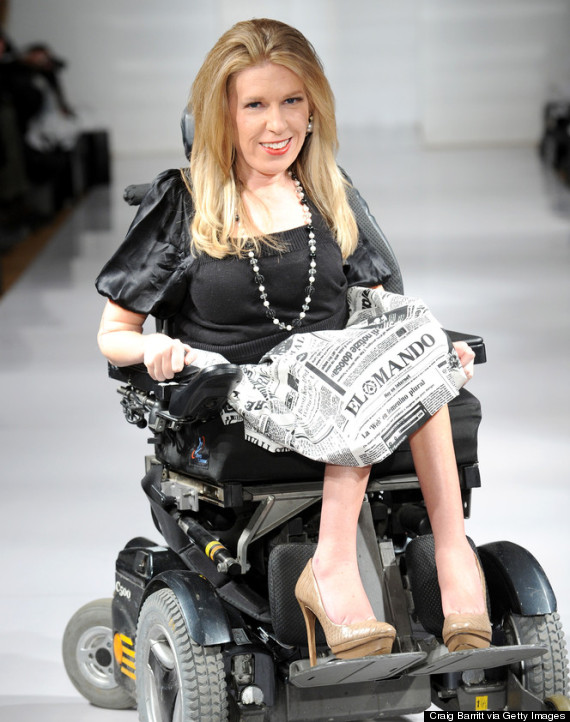
Last month, Jamie Brewer, famous for her acting in American Horror Story, made the headlines as the first model with Down Syndrome to walk in New York Fashion Week. This was a huge step in showing all women that they are beautiful, that they can look amazing in the clothing shown in Fashion Week. What's amazing, though, is the designer whose clothes Brewer modeled, Carrie Hammer. Her mission was to "feature role models over actually runway models." (Her line is actually called "Role Models Not Runway Models," and inspiring and empowering women from around the world are featured as models.) She did just that, and what an amazing impact her message had on the nation.

When Hammer was asked to show her designs at New York Fashion Week last year, she chose to use her own clients instead of real runway models. This included Danielle Sheypuk, the first model in a wheelchair to be featured in Fashion Week, and other models varying in height, weight, and ethnicity.

Jamie Brewer walking in Fashion Week
Carrie Hammer's mission to include real clients of all types modeling her clothing means so much to me and women throughout the world. As I said before, she has shown women that everyone can wear the clothes they see in Fashion Week, that everyone can feel beautiful.  Most importantly, though, Hammer has shown the world that a woman's image does not define them; it is only a small part of who they are. What's most important is a person's mind, what they do with their life, and who they are inside. Hammer realizes this and it is reflected in her models and clothing line.

Saturday, March 14, 2015

It's Okay

In American Studies class on Friday, we discussed Frank Bruni's article "How to Survive the College Admissions Madness," which was in the New York Times on March 13th. (If you haven't read it yet, please do so now before reading my opinions on it). Perhaps because I find myself perpetually stressing over grades and the ACT and college, I found the topic that Bruni struggles with important and relevent. However, I do not agree with some of his points.

This article tells the story of two young students, Peter Hart and Jenna Leahy, as a way of showing that "it's okay to get rejected." Bruni first tells us Hart's story- rejected from his dream schools, he attended Indiana University for college. But it's okay that he got rejected, because he eventually made it to Harvard. Believe me, I think it's great that Hart eventually got to Harvard and thrived. But I think that, for the sake of high school students stressing out about college, we need to realize that it's also great that he got into Indiana University in the first place. Not everyone can go to the Ivy's, and there are other great schools. Yes, it's okay to be rejected, like Bruni says, but it's also okay to never make it to the Ivy's, to never be the elite-elite of the country.

Bruni then goes on to tell Jenna Leahy's story. Leahy was rejected from her top choice schools, and ended up attending Scripps College. Bruni goes on to explain how Leahy accepted and eventually thrived and took risks because of her previous rejection from elite schools. He quotes her as saying "I never would have had the strength, drive, or fearlessness to take suck a risk if I hadn't been rejected so intensely before." This is great, but again I feel that Bruni is patronizing "the rejection" too much. It seems much more understandable that Leahy's success stemmed from her high quality education at Scripps College, not from her rejection of highly selective, elite schools.

I get where Frank Bruni is coming from, and I think his intentions are good; it is okay to be rejected. However, I believe that we need to realize that highly selective, elite schools aren't the only good schools in the world. It's perfectly okay to go to schools like Indiana Univserity. In fact, it's great; it's more than most of the world gets to do.


Unequal Education In The Illinois Constitution

Illinois schools spend an average of $8,786 per student per year. New Trier High School spends more than double that at $21,372. In contrast, Chicago Public Schools, only a short drive from NTHS, spend an average of $13,791 per student per year. For this reason, students in CPS schools receive a vastly different education and high school experience than students at New Trier (and schools with similar budgets). This unequal education is a complicated problem that is the root of many issues in the Illinois education system, and completely goes against the Illinois State Constitution. 

The unequal funding for Illinois schools completely violates the Illinois State Constitution, which states that "a fundamental goal of the people of the State is the educational developement of all persons to the limits of their capacities." I would argue that the limits of my capacities are no different than the limits of a student at any given Chicago Public School; I am no smarter than any other high school student. What the "limit" really is is money; students at New Trier have endless resources, amazing teachers and staff, countless extracurriculars, outstanding academic opportunities that other schools simply cannot afford. It seems to me that the State is not meeting their "fundamental goal" to educate all students equally. For the education of all students in Illinois to be more equal, the funding for Illinois schools must become more equal.

Additionally, the Illinois State Constitution promises to "provide for an efficient system of high quality public education" for all students in Illinois. To what extent, though, can a school provide a "high quality" education without the means to do so? Are students in Chicago Public Schools receiving the same quality education as students at New Trier? I would say no. The average ACT score at New Trier High school is a 26.8; in contrast, the average ACT score at Kelvyn Park High School, a Chicago Public School, is a 15.1. In addition, New Trier has a graduation rate of 98.5%, and 99% of students who graduate go on to college; Kelvyn Park has a graduation rate of 59.3%.The quality of education at these two schools is simply not equal, not what the state promises. The state must provide schools with enough money to provide a "high quality" education if they want to keep the standards they set up in the state's constitution. 

The amount funding a school receives plays a large role in the education the student receives, and we all know how important education and high school is in determining a person's future. How can the state change to provide a better, more equal education for all students? 

Two Bachelorettes: A Feminist's Worst Nightmare

Last week, 14.3 million viewers tuned in to watch the finale of Chris Soules' season of The Bachelor, and I would bet not one of these viewers wasn't shocked at the announcement that the next season of The Bachelorette will feature Kaitlyn Bristowe and Britt Nilsson as the bachelorettes. At first I thought Great- double the dates, double the drama, double the love. But no- according to the show's host, Chris Harrison, "The 25 men on night one are going to have the ultimately say about who they think would make the best wife." One of the bachelorettes will be rejected and sent home by 25 men after one night. This kind of rejection- 25 men voting on which woman will make a "better wife" after just meeting her- is completely insulting and degrading to women, and sends a horrible message to the millions of young female viewers that tune to the show every Monday night.

The main reason why I think this "two Bachelorettes" thing is degrading to women (especially Nilsson and Bristowe) is because it gives the power to the male contestants, not the bachelorett(es) that the season is supposed to be focusing on. The men will send one woman home based solely on first impressions- looks, mostly, because who can get to know a person fully in a few hours? Additionally, I have a problem with the fact that the men are literally voting on not who they think would make a better bachelorette, but who would make a better wife. Inevitably, either Kaitlyn or Britt will be sent home after the first cocktail party, and as she is filmed crying to herself dramatically in the limo, she will think, Wow, it wasn't just one man who thought I wasn't the "best wife," it was the majority of 25 men. 

Previous Bachelor Sean Lowe stated on his blog that, "When I was The Bachelor, the producers selected girls for my season whom they thought were well suited for me." Who are the producers choosing this season- men that are right for Britt or men that are right for Kaitlyn? Half and half?After watching Chris Soules' season, I can safely say those are not the same guys. This fact makes me feel like there isn't a great chance that whoever is chosen as the next Bachelorette will find true love- which is what the show is supposed to be about.
Kaitlyn Bristowe and Britt Nilsson

I have a lot of problems with the fact that there are two Bachelorettes next season, and so do a lot of other people. Above all, I think that it shows women that men have the power, that they can choose who is and isn't a good wife, a good in general. Having two Bachelorettes on an already controversial show just won't work, and most importantly, it just isn't right.

With that said, I understand that the show did this for ratings, that last season was so dramatic that they couldn't choose one woman for next season, that having two Bachelorettes is exciting. However, I think there are better ways to make the show more exciting and increase ratings. How do you think they should have gone about this issue?


Friday, February 27, 2015

John Legend's Legendary Speech

Last week's Oscar's have the media world spinning; there is so much talk about the performances, winners, speeches, dresses, and more. I even wrote another blog post that focuses on the racist comment about a celebrity's hair. In this post, I'd like to focus on the powerful and moving acceptance speech of John Legend, one of the writers and singers of "Glory," the Oscar-winning song written for the movie "Selma."

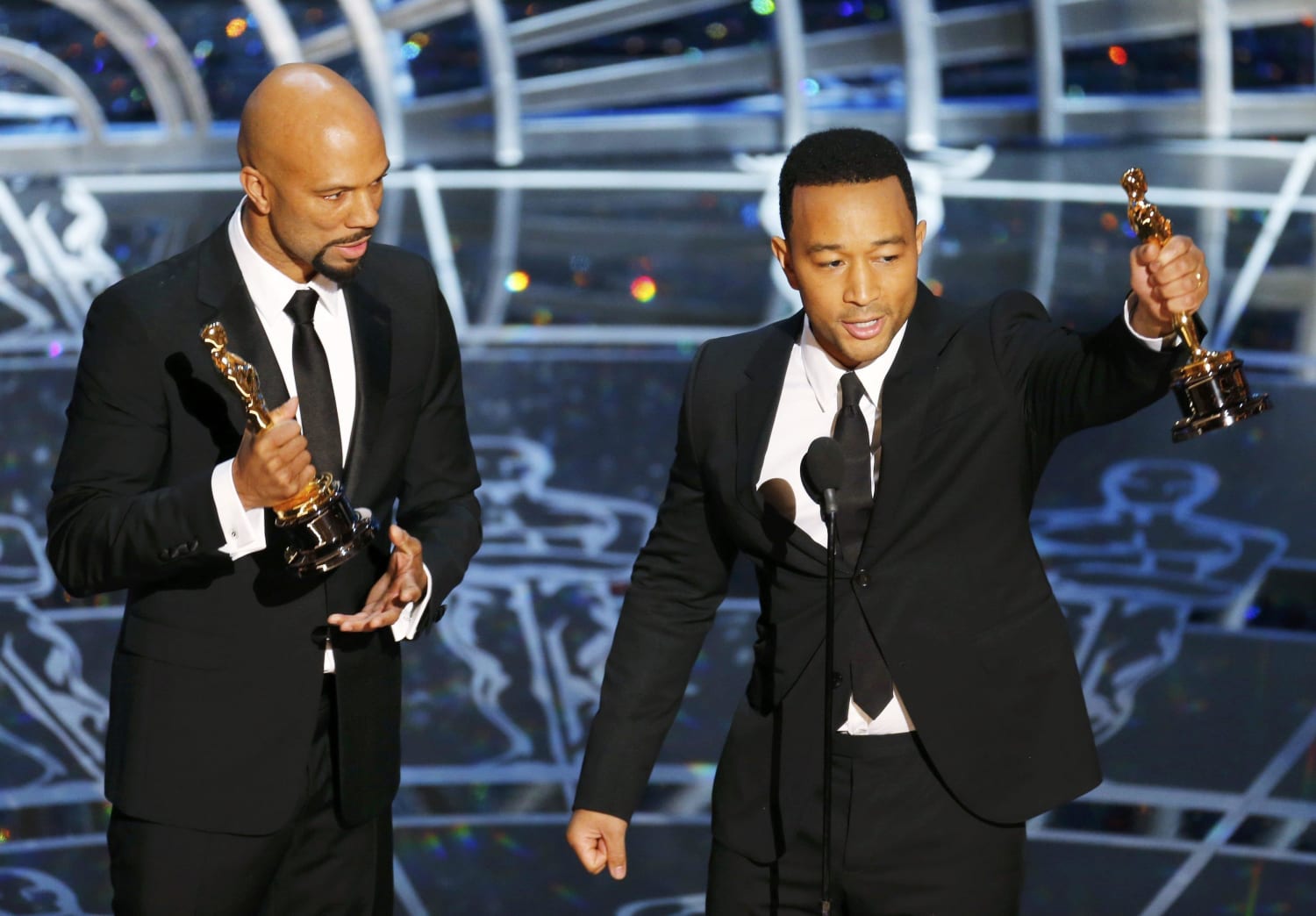
In his acceptance speech for the award for Best Original Song, Legend brought national attention to the fact that the United States is "the most incarcerated country in the world." He goes on to state that "There are more black men under correctional control today than were under slavery in 1850." And he's right. In 1850, there were 872,924 African American men of 16 years or older enslaved in the today, there are about 1.68 million African American men under correctional control. (Remind anyone of Billy Dee's interpretation of the Prison Industrial Complex?)
Common and John Legend accepting the award for Best Original Song
United States. In the United States

Like his song "Glory," Legend's acceptance speech brought a very important and increasingly prevelent issue to national attention. (I wrote another blog post about "Glory" and its relevance to the United States today; please check it out if you don't know a lot about the song and would like to understand how it is still relevant today.) Although the song was written for a movie about events that took place 50 years ago, it's lyrics are still very relevant today. Similarly, although slavery is part of our nation's past, we see that an extension of it lives on in the incarceration of African American men. What Legend doesn't mention is how we might fix this problem of the overwhelming incarceration rate of African American men in the United States. (We talked about it a little in class while discussing the Prison Industrial Complex.) There is so much to consider when thinking about how we might fix this problem. First, how did this problem come about, and why? Why is the incarceration rate of African Americans increasing at such an alarming rate?

A Strong Mane

Last week, 43 million people tuned in to watch this years Academy Awards, or the Oscars. Although the primary focus of the night is obviously to honor the best in the movie world, there is always talk about what celebrities are wearing. This year, Fashion Police "correspondent" Giuliana Rancic commented on 18-year-old Zendaya Coleman's hair, stating that star "probably smells like patchouli oil or weed." Wow.

Despite the blatantly racist and offensive nature of Rancic's comment, Zendaya Coleman commented with eloquance and pride. Take a look at her full response to the Rancic's comment below, along with how amazing Zendaya looked:
Zendaya Coleman at this year's Oscar's


Don't feel like you have to read the entire response, but it very enlightening. Zendaya focuses on the fact that the fact that young African American girls must smell like weed is a huge stereotype, then goes on to name many successful, powerful, African Americans that sport dreadlocs. She then goes on to say what locs mean to her, that they are a "symbol of strength and beauty." Lastly, Zendaya stated that "some people should listen to India Arie's 'I Am Not My Hair.'"

Her response, while eloquent and enlightening, was also very true and much needed. The fact that she was able to bring up so many important issues, such as stereotyping and labeling people because of their hair, to such a large scale audience, will hopefully bring about much needed change and coversation about important issues. Society needs to confront these issues and stop stereotyping and  judging people based on a physical feature, based on their race. We need to change the way we view young women of color, and people of color in general.

How can we make this change?

Friday, February 13, 2015

Beyonce's "Glory"

At this year's Grammy's on February 8th, "Queen Bey" (Beyonce) herself performed her rendition of "Take My Hand, Precious Lord," which would seque into Common and John Legend's original song "Glory" from the new movie Selma, a film about Dr. Martin Luther King, Jr.'s march in Selma, Alabama and the civil rights movement. If you haven't already, take a look at Beyonce's performance at this year's Grammy's below:

While obviously an outstanding and breathtaking performance- both vocally and visually- Beyonce's performance at this year's Grammy's was also a statement. Why did an oh-so-popular African-American singer perform a gospel song, followed by two more African-American musicians performing their new song from a movie about the civil rights movement? 

This is not pure coincidence. Both of these Grammy performances and the movie Selma seemed to happen at just the right time: just look at what's going on around the country lately. In the words of Common, "I looked at Ferguson and saw what was going on, and knew that it wasn't far from what was happening during the civil rights movement. We wanted this song to be inspirational. We wanted it to have pain, but also hope." "Glory" has recently become a sort of anthem for social justice and a rallying cry throughout the country. Common and John Legend are using this song to parallel the civil rights movement and Selma to what is happening in our country today. Common states that he and Legend tried to capture the horror and reality of the civil rights movement, but also wanted to "make it present." In a song for a movie about a march that took place almost fifty years in the past, the writers are making explicit parallels to events in our country today. And here I thought the struggle for civil justice was over; I thought the civil rights movement was a success. 

Both Beyonce's rendition of "Take My Hand, Precious Lord" and Common and John Legend's performance of their song "Glory," along with the impecible timing of the movie Selma, are a cry for change. It seems to me that these Grammy performances (and Selma, for that matter), were projected to such a large-scale audience for a reason: to bring civil rights issues to national attention once again, so that we cannot forget what has happened in places like Ferguson in the past months, and what is still happening. 

To what extent do we see parallels to the civil rights movement today? Have things truly changed?

The Story the Director Tells: "American Sniper" Review

The new movie American Sniper is the true story of Navy SEAL Chris Kyle's four complete tours of duty in Iraq. The film, directed by Clint Eastwood, is based off of Chris Kyle's autobiography by the same name. The story focuses on Kyle's experience during his tours and the effect the war has on his relationship with his family and the psychological problems he faces after returning home. Overall, I found American Sniper to be both a heartwarming story how a family dealt with the inevitable struggles of a military family and a heartbreaking tale of the psychological damages of war.

Diving a little deeper into the politics of the film, however, I can't help but wonder to what extent the film represents Eastwood's views on war and not Kyle's. Though the film follows the basic plot of Kyle's book and clearly aims to portray him realistically as much as possible, I found that the underlying messages about war largely contradicted the messages I got while reading Kyle's autobiography.

Director Clint Eastwood is largely anti-war and anti-violence. In his own words, he was "against going into the war in Iraq." He has also stated that he was against many other wars the US fought in; Eastwood believes that war is "intrinsically destructive to warriors." These political views are seen in American Sniper. For instance, high-ranking military officials are portrayed as out-of-touch with what goes on on the battle field, as asking all the wrong questions, and plainly unknowledgeable about the details of what soldiers go through, what should be done in battle, etc. This reverence of the warrior and unaccepting portrayal of commanding officers reflects Eastwood's opinions on war; not Kyle's. In fact, after reading Chris Kyle's autobiography, my understanding of his views on war is that it is good and necessary to protect our country and our people.
Chris Kyle and wife, Taya

          Bradley Cooper as Chris Kyle


While I felt that Eastwood's attitude toward war- not Kyle's- were evident in the film, I truly feel that Bradley Cooper's portrayal of Chris Kyle was true-to-heart and accurate, as were the director's decisions on how to portray Kyle. In other words, I feel that this aspect of the film truly honored Chris Kyle's autobiography- his own words and feelings. For example, there is a scene in the movie where Kyle meets with a psychologist at a hospital for war veterans. He tells the doctor that he only regrets that he could not save more of his men. In his autobiography, Kyle emphasizes this fact: he did not regret killing so many enemies, only that he could not save more Americans. Overall, American Sniper was an accurate portrayal of Navy SEAL Chris Kyle's journey as a soldier, father, husband, and veteran.