Monday, January 5, 2015

New Year, New America

As the new year begins, 21 states will see a rise in the minimum wage. Although the federal minimum will remain at $7.25 an hour, these states are well on their way to having a minimum wage of $10.10 an hour by Jan. 1 of 2017, the wage that Obama wants to pass as the federal minimum. These increases will introduce countless positive changes in the coming year, and hopefully the remaining 29 states will follow.

About 4.3 percent of all hourly paid workers, until now, were paid below the federal minimum. No wonder the poverty level in America is at an all time high. Perhaps these 21 states have kick-started a period of positive change for the United States, a period of increased prosperity and less poverty. About 12.5 percent of the United States population lives below the poverty line of $23,550 a year. Increasing the minimum wage to $10.10 an hour (Obama's goal by 2017) would bring about 1 million families above the poverty line. Additionally, the cost of living in the U.S. is increasing rapidly: "Groceries cost 20% more, a gallon of gas costs 25% more, and average tuition at a community college increased 44%." As the cost of living increases, the minimum wage must as well, or else more and more families will be thrown under the poverty line. 

We as Americans pride ourselves in being the "land of opportunity." Realistically, though, we live in a land of opporunity for the rich. We've all heard the statistics: that 1% of the U.S. population controls a third of the wealth in our country. And it's true, and it's insane. To me, it seems as though until more Americans are able to afford basic necessities, we Americans have nothing to pride ourselves in, for we are not a "land of opportunity" for all. And until the minimum wage is raised to a reasonable degree, this cannot and will not happen.

A Plea For Change

Leelah Alcorn, a 17 year old teenager from Ohio, died on Sunday, December 28th. Leelah was born Joshua Alcorn, and struggled with depression because her parents were not receptive when she came out to them as transgender. In a note she left behind, she states
Leelah Alcorn
that "the life I would've lived isn't worth living... because I'm transgender." She hopes that her story will show the American public that something needs to be done about how we as Americans view the LGBTQ community, that something needs to change. In the words of Leelah Alcorn, "my death needs to mean something."

Leelah's story has sparked interest among social media. Many transgender adults have started a hashtag, #RealLifeTransAdult, to share their stories and show transgender teens that things will get better, that they have support. In addition, a petition was created in Leelah's memory to ban conversion therapy, the practice of trying to suppress or altogether eliminate a teenager's sexual orientation through therapy. The petition has over 88,000 supporters. Your death does mean something, Leelah.

"Gender needs to be taught in schools," said Leelah, and she was right. Gender identity and sexual oreintation need to be taught in health class, so that this does not happen again. Something needs to change.

About 3.5 percent of the United States population identifies as gay, lesbian, bisexual, or transgender. About 1-2 percent of the population has red hair, a trait we consider to be a normal part of the scope of human diversity. Why are we so unnaccepting of the LGBTQ community, when it is even more common that having red hair?


Sunday, November 30, 2014

What Happened in Ferguson

Lately, it seems that all that's it the news is what happened in Ferguson- who's right, who's wrong, and now, what to do to change the law enforcement system in America today. A black teenager, Mike Brown, was shot and killed by a white police officer, Darren Wilson, who was not indicted. Should Officer Wilson have been indicted? I don't feel it's my place to voice my opinion; I simply don't know enough about what happened. However, I do realize that something needs to be done about the law enforcement system in our country.

In the above image, the number of civilians shot and killed by police officers is shown. Alarming, right? 404 civilians in the United States, as opposed to 6 in Australia, 6 in Germany, and 2 in England and Whales. Why do American police officers kill so many more people than other nations? (image and statistics from Business Insider.)

Ladd Everitt from the Washington-based advocacy organization, calls the issue of police violence in America "a product of the continuing arms race between law enforcement and civilians that has been going on for decades." He goes on to discuss why this number is so high in the U.S.: the accessibility of powerful firearms to the general public in our country is alarming, and constantly growing. Police have "legitimate fears" for their lives, as they face civilians with weapons as powerful as their own on a daily basis. The number of police shootings will inevitably continue to increase if nothing is done. How do we, as Americans, change the system that created this problem? How will we decrease the violence that is constantly becoming more of a threat to our country's wellbeing? 


Friday, November 21, 2014

Step Aside, Barbie

This past week, the internet has gone crazy over Nickolay Lamm's release of her "real-life Barbie doll," a doll similar to the famous "Barbie," but with a normal waist size, normal height, regular feet and hands, and brown hair. The doll even comes with accessories: stick-on cuts, cellulite, stretch-marks, or acne. This doll, named the "Lammily Doll" after the creator's last name, will help the young girls playing with the doll create realistic expectations for and images of their bodies.

The purpose of the Lammily doll is to show young girls what "normal" looks like. The average weight of an American woman is 166.2 pounds, and the average waist size 37.5 inches. Barbie, however, supports a 16-inch waist, and, because of her proportions, would be unable to lift her head, have to walk on all fours, and would have room for only half of her intenstines. In a society where children want to look like the dolls they play with (role models), this completely unrealistic doll creates even more unrealistic expectations for the young women in America today. The Lammily Doll has done the complete opposite: created a role model for young women whose body is attainable, admirable, and normal. In the words of the doll's creator, "reality is cool."

Watch how American children reacted to the doll Here.

Barbie

               Lammily Doll

Sunday, November 16, 2014

The Sheep are Marching

America values success. An adult's value is measured by where they live, what car they drive, and what clothes they wear, whereas the worth of high school students is measured by their grade point average, ACT and SAT scores, how many extracurriculars they take part in, and, ultimitely, what college they attend. Dr. Nussbaum, author of "American Cultural," deems success the "highest value in American life."

What does America's obsession with success say about our society as a whole? Why can't we judge others based on their personality, values such as kindness, compassion, and hard work? This drive for success has caused many problems for our society. For one, high school students are under more stress than ever before.

According to the American Psychological Association, "30 percent of teens reported feeling sad or depressed because of stress and 31 percent felt overwhelmed. Another 36 percent said that stress makes them tired and 23 percent said they've skipped meals because of it." Teenagers are so concerned with doing well, that it actually affects their mental health. Skipping meals and sleep because of school? And how many of us have stayed home on a Friday or Saturday night just to study? I know I have- a lot.

This stress is because of the overwheming pressure we put on ourselves as Americans to become successful adults. We as teenagers are so afraid for our future, that we let society push us around. In the words of William Deresiewicz, author of "The Disadvantages of an Elite Education," we are "excellent sheep," trained to do well in school and study hard. We are marching coopertively towards the country's best universities, prepared to make a career, not a mind. And if we don't succeed, if we don't become rich or important or what have you, for whatever reason, we feel like failures. If we don't end up above average, we feel like failures. Are we failures?


Saturday, November 8, 2014

"No More Fantasy Breasts"

Last week, 29-year-old actress Keira Knightly made headlines after posing nude. Her one condition: no photo-shop. Knightly's reasoning for this rule is simple: "it does feel important to say it really doesn't matter what shape you are." Why can't American media accept this? It would make women feel a whole lot better about themselves. 

We all know that photos in the media are altered- a lot- so why do we keep striving to achieve this image of a "perfect woman"?  Because of what we see in the media. Whether we know it or not, the images that we see every day, whether it be in magazines, commercials, billboards, or advertisements, affect the way we see ourselves. A lot.

The media and the heavy editing that goes into the photos we see have a clear negative impact on the self-esteem of women in particular. A study by the "Dove Campaign for Real Beauty" found that only 2% of women find themselves beautiful. Additionally, 33% of women feel that they are striving to obtain a body image that is impossible. Self-esteem is becoming an increasingly more prevalent issue in the United States. America needs to stop romanticizing unnatural, unhealthy, and unattainable images of woman and instead focus on natural beauty and healthy body types.

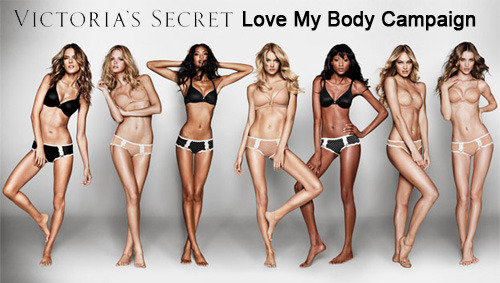
Victoria's Secret "Love My Body" Campaign


Dove's "Real Beauty" Campaign
Above are images from Dove's "Real Beauty" Campaign and Victoria's Secret's "Love My Body" Campaign. Which image to you feel better about? Think about how the media affects you and how you view yourself. 

Keira Knightly, the Dove Campaign for Real Beauty, and many other celebrities and brands are showing women that it is okay to feel comfortable in your own skin, that you should feel comfortable in your own skin. I hope to see other individuals and organizations jump on this trend.

Sunday, October 26, 2014

Haiti: I Promise It's Pretty

Haiti is often thought of as a sad country of extreme poverty and buildings so destroyed they've become inhabitable. While these issues are real and important, that's not all that Haiti has to offer. Paola Mathé, a native Haitian, uses her Instagram account, @findingpaola, to reshape the way Americans view the beautiful country. (A great, positive way to use social media!) In her words, "I have the opportunity and the voice to show what Haiti is also about. It's not just about extreme poverty, which we're also trying to fight and help -- but at the same time, it's a beautiful place." 

Americans truly view Haiti as a horrible place, a country they never want to go to. In an article from Gadling, Port Au Prince (Haiti's capital) was ranked #3 on a list of the "Top 10 Places You Do Not Want to Visit in 2012." #3! The author states that "It is the kind of place where relief workers are swallowed whole by the earth." This doesn't make me want to go down there and help, which is exactly what we as Americans should have been doing in the months and years following the 2010 earthquake. Maybe if more Americans had gone to Haiti to help, it wouldn't have been on this list. 

Haiti has seen so many recent devastations to its land, government, economy, etc., and has made such a strong recovery in recent years, yet outsiders still view the country with such a negative outlook. Perhaps we should look at things a little differently: The 2010 earthquake in Port Au Prince killed 300,000, left 3 million without homes, food, or water, and destroyed 30% of the affected area's capital. 13 billion dollars in damage! Since the disaster, 97% of the rubble has been remover. Additionally, Haiti has seen a recent growth in GDP, a reduction in cholera cases, and the addition of many more health centers across the country. So why do we still view the country as a bad place to vacation? 

I've been to Haiti twice- in the mountains of Kenscoff and Lamardelle, and to the capital, and I promise it's a nice place. The way we view the country needs to change.

A personal photo: Kenscoff, Haiti